



The following is the first in a series of framebuilder interviews.
Jeffrey Bock of Ames, Iowa has been building timeless bicycle frames for 50 (!) years. Jeff is one of a rarer and rarer breed—someone willing to take time out of his day to share a bit about himself and his process.
As I emailed back and forth with Jeff, I found his replies so complete and so delightfully packed with joyful detail that I decided not to re-write or paraphrase any of his answers. I enjoyed his origin story so much, I thought I should let his answers speak for themselves.
-B
Select Photos by Christopher Maharry
—

What got you into framebuilding and how did you get started in this industry?
I built my first frame in 1975. Let me begin by saying, nothing about my decision to start building frames was rational!
The story begins something like this —
After graduating from the University of Northern Iowa in 1974, I went to work for Europa Cycles (the local bike shop across the street from the campus). I had been an Art major with nothing like a teaching license added on so the offer of gainful employment in a real bike shop seemed miraculous! I had been a cyclist in one form or another my whole life, but going to work in a shop ratcheted things up to an entirely different level. In the space of several months, I had acquired a brand new Raleigh Professional, a ’64 Schwinn Paramount and a Campagnolo Tool Kit (every small local bike shop should have one, right?).
At the same time, I was looking for the “next step up” in the form of a genuine touring bike (something specifically designed, and built, for touring rather than a road-racing frame with eyelets on the dropouts). Regardless of where “touring bikes” ranked in importance to the industry now, they ranked far lower then! Being as I was working in a shop, I had a vague notion that “custom” frames existed, but outside of a trip to Europe, I had no idea of where or how to go about acquiring one.

So, I made the journey to Michael’s Cyclery in Ames, Iowa. Back then, Michael’s Cyclery was the pilgrimage shop. It was where you went to seek bicycle enlightenment. I asked Michael Fatka, the owner, if he knew where a person could go to learn how to build frames. He said he didn’t, but he had a guy working for him, Mike Bornstein, who had been working on it and could possibly help me out. Fatka introduced me to Bornstein.
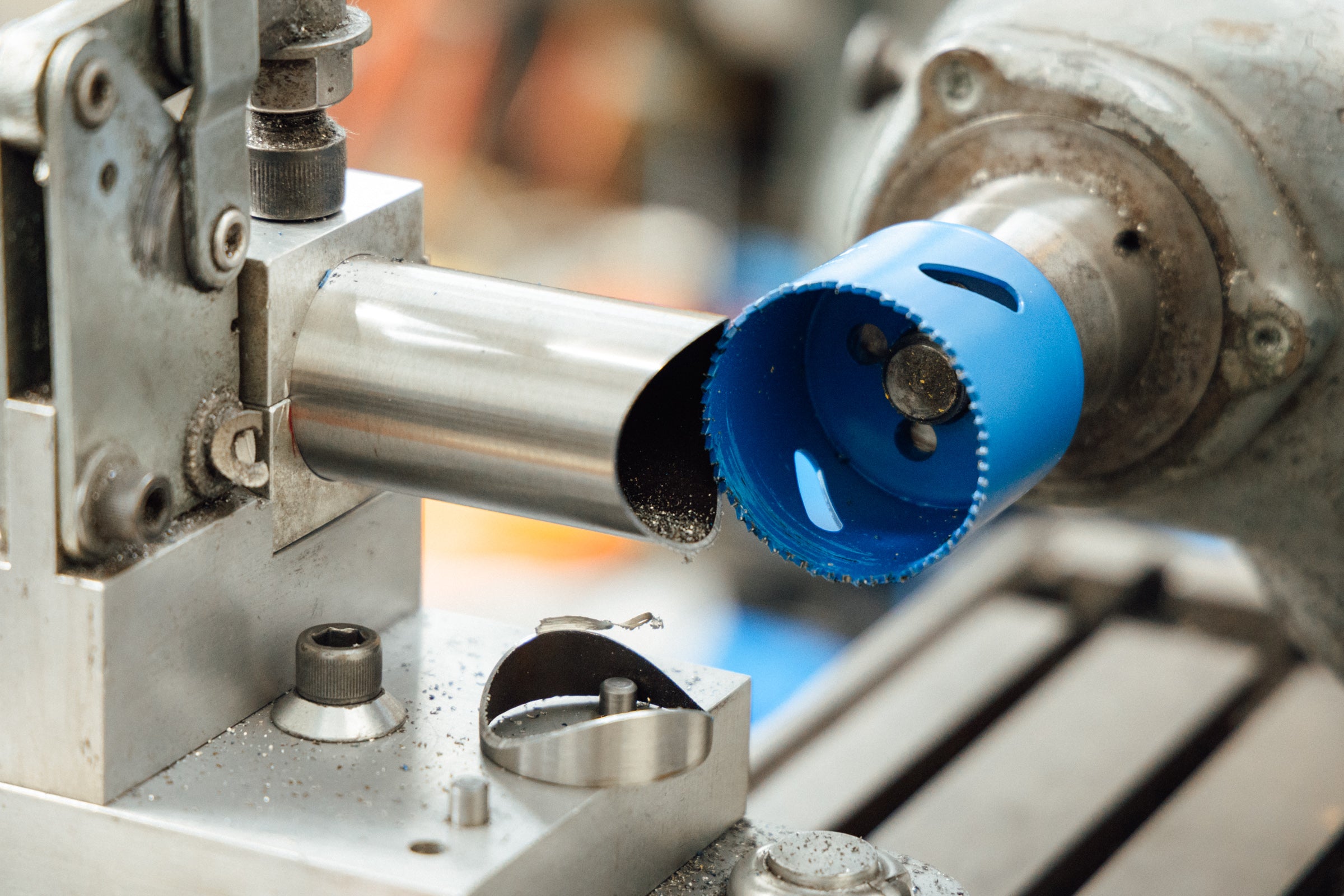
Previous to this, Bornstein had contacted Cecil Behringer in Minneapolis. Mike visited Behringer's shop where Cecil showed Mike around, provided information and answered questions. When I asked for Behringer’s contact information, Mike said, 'Sure, if you want, but, I’ll tell you everything Cecil told me and I won’t charge you.' Naturally I agreed. Mike had me select lugs, dropouts, tubing and all the other bits necessary for building a frame. He also gave me a list of tools I needed to buy (among other things, a good bench vise and lots of hand files) and tasks to be completed before we met again (lug prep and tube mitering — yes, by hand).
We met next in the basement of Michael’s Cyclery where Bornstein had setup shop. As we were getting started Mike asked, 'What are your expectations for this frame?' I said, 'I hoped it would be as nice as my Raleigh Pro.' He looked me in the eye and said, "Jeff you really need to raise your sights."
Then he took me upstairs and showed me a Strawberry frame (made in Portland by Andy Newlands and Mark Dinucci). I was stunned! I had absolutely no idea that a bicycle frame could be that beautiful! My expectations were raised. Fifty plus years on, I’m still working to get there.

As an aside, I should mention — Micheal Bornstein is one of those people who is EXTREMELY good at figuring our how to make things. Shortly after helping me build my first frame, he moved to Portland and worked at Strawberry for a time. We met up again in Ames and we shared a shop for a number of years. After leaving frame building Mike went into tool & die work and industrial tool design. Eventually he landed up at Ball Labs (they’re the people who fixed the Hubble Telescope — way above my pay grade).

Albert Eisentraut contributed a chapter on frame building in book called, Bike Tripping, by Tom Cuthberson. It was both interesting and inspirational. It was one of the things that made me think that building a frame myself might actually be possible.
About the time I was getting started, a frame building company called Proteus put out a book called, The Proteus Frame Building Book: A Guide for the Novice Bicycle Frame Builder, by Dr. Paul Proteus. It is/was pretty basic. It could even be described as crude. I think the purpose of the book was to help promote the sale of their “frame building kits” to aspiring builders. I’m really glad I had Bornstein’s tutelage, but the simplicity of the Proteus book was actually quite useful in demystifying the frame building process.
I mean it’s a bicycle frame, not a space ship.
What kind of bikes do you enjoy building the most?
Touring bikes, Rando bikes and Commuter bikes.
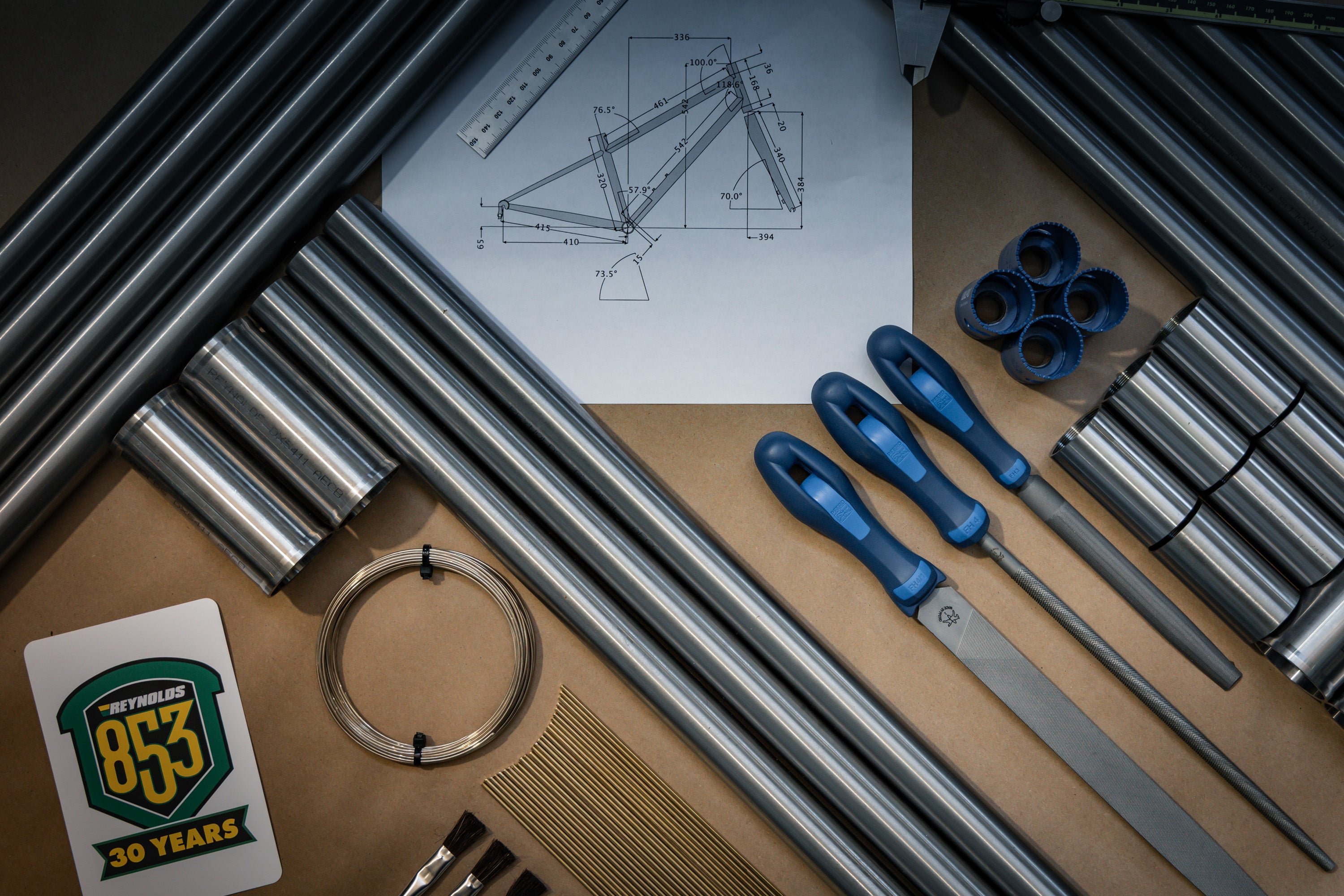
Did Reynolds' 853 tubing change your process for building a frame? Why did you select this tubing? Did working with it alter your opinion of tubes or Reynolds tubing in specific?
Reynolds tubing has always been one of my favorites. One of the things I like about Reynolds is that they've always offered tubes in various gauges/wall thickness/butt profiles.
Changes to my process? As you must realize by now, I am rather “traditional” in my approach. With 853 I am unable to rake my own fork blades.

What is your favorite tool?
That’s a bit like asking a parent, which is your favorite child? For me, there is no single answer to that question.
What is your favorite part of framebuilding?
I like working with the lugs (and BB shells and fork crowns). In my case this means altering the shorelines, reducing the thickness and possibly tweaking the angles to fit the design.
Name your top 3 favorite builders or people to watch in the industry.
I’m 73 years old and I’ve been building for over 50 years. My favorite builders, the people who influenced me are mostly retired from building. As I said previously Andy Newlands and Mark DiNucci at Strawberry were a huge influence and inspiration. Albert Eisentraut’s Signature frames are/were amazing. Mark Nobelitte is almost as old as me and has probably been building longer, but I think he does amazing work.
Brian Chapman is a relative youngster, but he does some crazy nice stuff!

What piece of advice would you give to those folks building their first frame?
I really don’t know that I could improve on Bornstein’s advice to me “… raise your sights”. In other words, reach for the moon!
To that I might add — it’s a journey. If you’re doing it right, the end/destination keeps moving. You have to be at peace with the idea that you never arrive.
—
Thanks Jeff!
You can check out more about Jeff's work here.
